Thai Red Curry Noodles | with crispy shallots & cashews


These easy-to-make Thai Red Curry noodles make the perfect lunch or supper for any time of the year. Made with simple ingredients and easily adaptable, these red curry noodles are great for the whole family and are a meal that can be on the table in under 30 minutes!
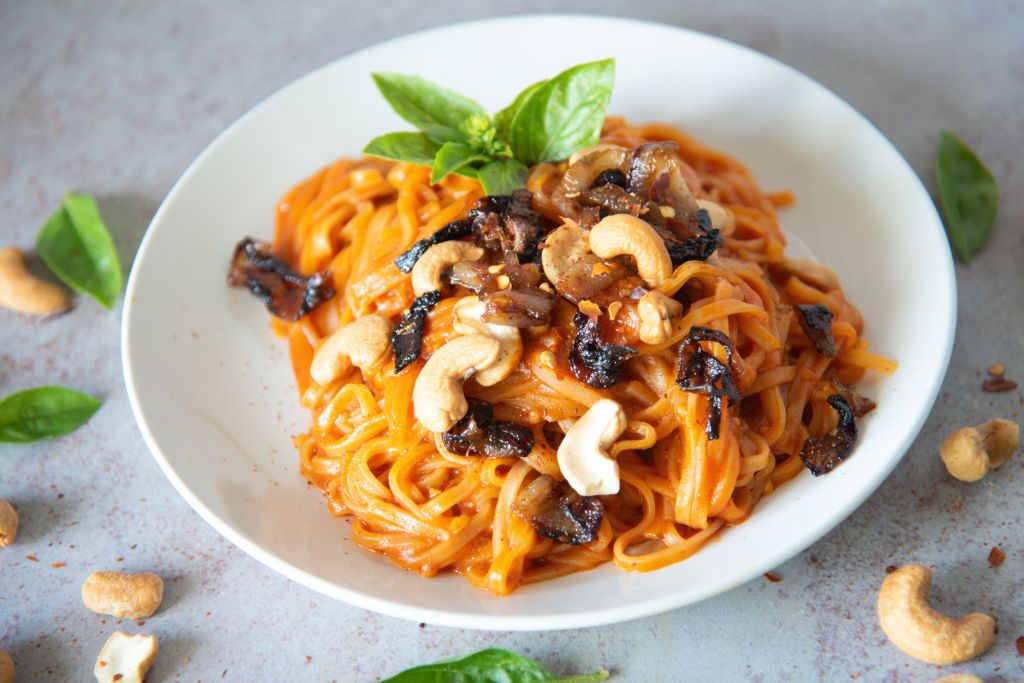
In case you hadn’t figured it out by now, I really like noodles, and I’ll take just about any excuse to eat them.
The only real trouble is I live with other people, people who don’t always believe pasta can be a complete meal, and get sick of eating the same recipes over and over again.
Which might just be why there are so many gosh darn pasta and pasta-related recipes here on the blog. But no, I’m not sorry to be sharing yet another one.
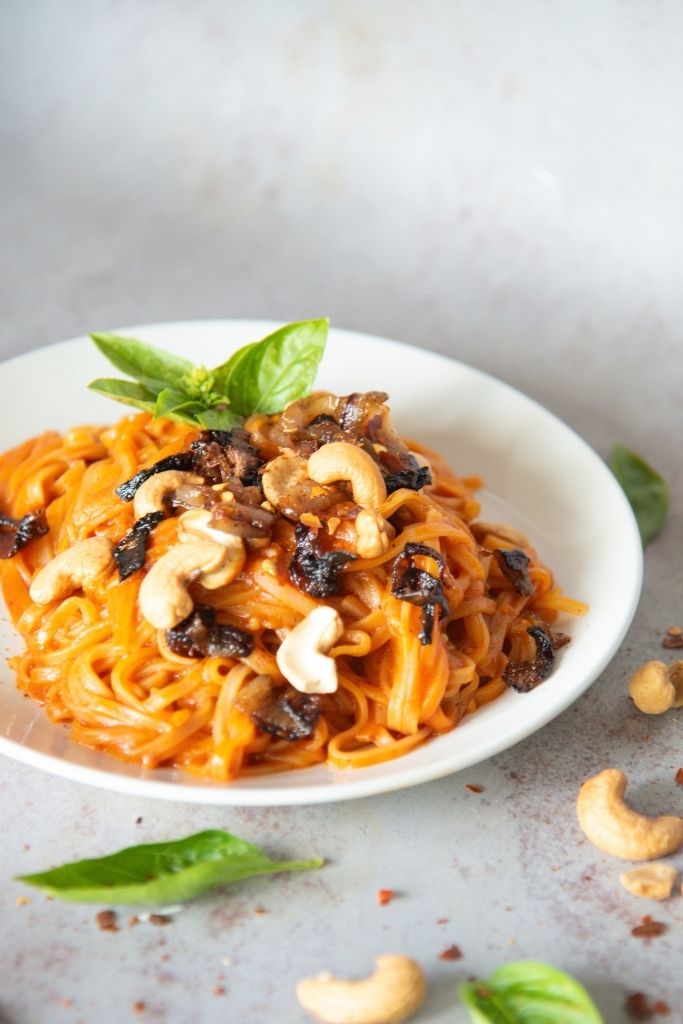
Thai red curry paste might just be my new favorite ingredient in the kitchen, and if you’ve never had it before, please, for the love of everything, give it a try.
For months, I’ve been using it to create creamy, delicious broths for soups, dumplings, and more.
And let’s just say I was pretty excited to finally get around to putting in noodles too. This recipe perhaps came out a bit fancier than I had meant it to, because while this sauce is pretty darn good on its own, it’s even better with a few additions.
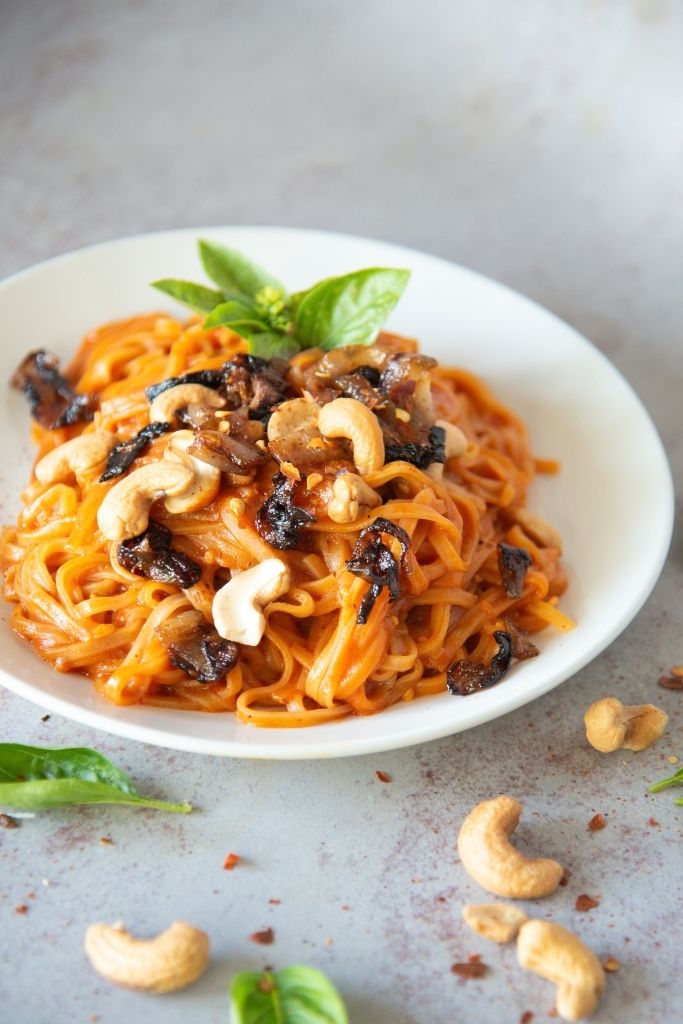
Fresh basil, toasted cashews, and crispy caramelized shallots take this simple recipe to the next level, making it fancy enough for dinner parties, or if you feel like showing off a little in the kitchen.
But between you and me, these noodles truly are beyond easy to make. You can easily have them on the table in under 30 minutes, meaning they are perfect for weeknights, lunches, and any time you need something quick and yummy.
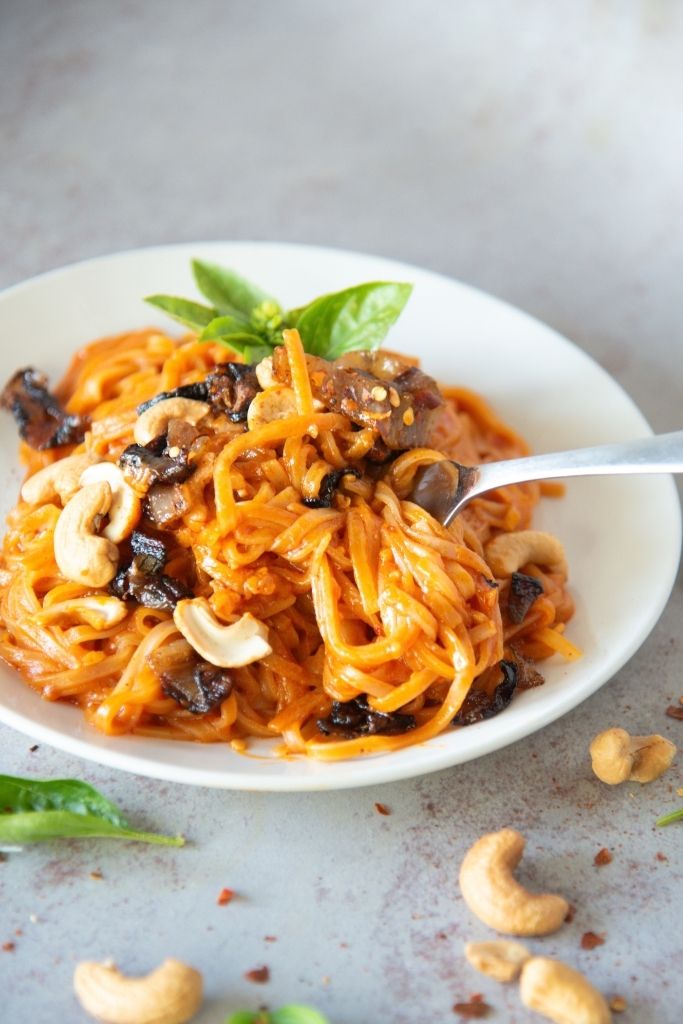
Thai Red Curry Noodles
Ingreidents
- Noodles, I like to use thin brown rice noodles, but you can also use egg noodles, wide rice noodles, soba noodles, or udon noodles.
- full-fat coconut milk
- Thai red curry paste
- Tomato paste
- soy sauce
- fresh garlic, minced
- ground ginger
- olive oil
- maple syrup. You can also use honey, white sugar, or brown sugar to sweeten the sauce.
- fresh lime juice; I use 1 lime
- corn starch
- sea salt and freshly ground black pepper, to taste
- shallots, peeled and thinly sliced
- butter or additional olive oil for cooking the shallots
- salted toasted cashews
- fresh basil, finely chopped.
Additional Add-in Ideas
- sautéed bell peppers
- Thai basil
- green onions
- sautéed bok choy
- bean sprouts
- green beans
- sesame seeds
- chili flakes
- fried egg
- crispy tofu
- snow peas
- grilled chicken
How To Make Thai Red Curry Noodles
In a small skillet over medium heat, melt some butter or drizzle the pan with olive oil, add your sliced shallots, and cook, stirring often, until the shallots are crispy. Once the shallots are done, remove the pan from the heat and set aside until ready to use.
Bring a pot of water to a boil; once boiling, cook your noodles of choice according to the package instructions. Drain and rinse under cold water to keep from sticking. Set aside until ready to use.
Drizzle the olive oil into a skillet(I like to use a large skillet so there is enough room for my sauce and noodles), add the minced garlic, and cook, stirring often, until the garlic is slightly browned. Add the ground ginger and cook until fragrant.
Add the coconut milk and whisk to combine. Then add the soy sauce, red curry paste, tomato paste, maple syrup (or sweetener of choice), lime juice, salt, and pepper. Stir to combine, taste, and adjust the seasoning if needed.
Bring to a gentle simmer, stirring often. Once the sauce is simmering, add the cornstarch and whisk to combine. Continue whisking until the sauce thickens enough to coat the back of a spoon, 2-3 minutes.
Add your cooked noodles to the thickened sauce and toss until they are completely coated in the sauce. Continue cooking just until the noodles are heated through, then remove the pan from the heat.
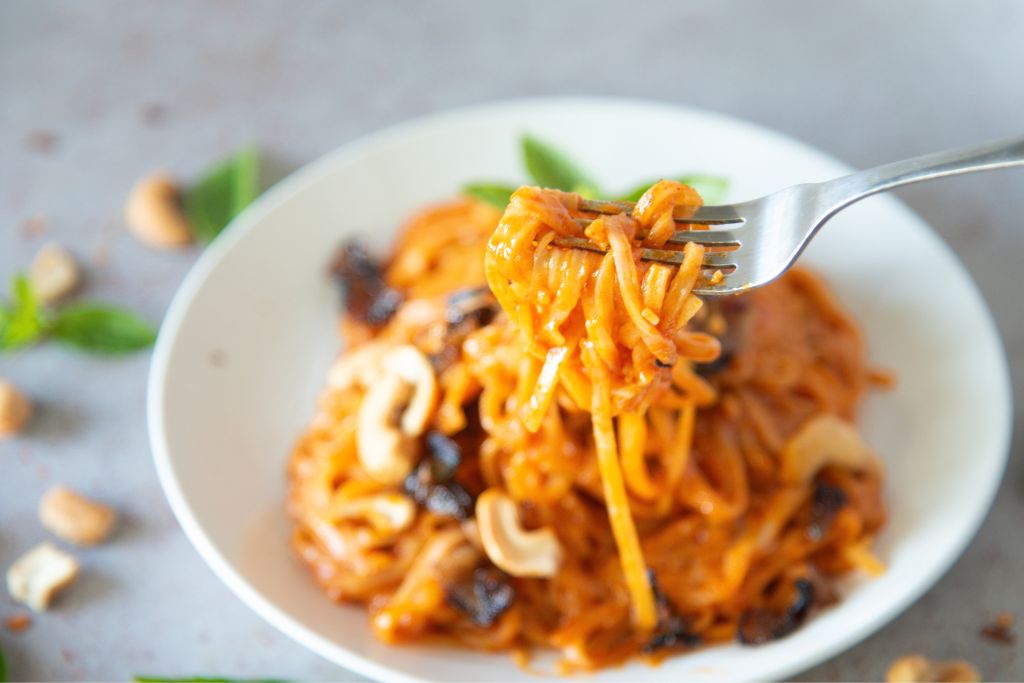
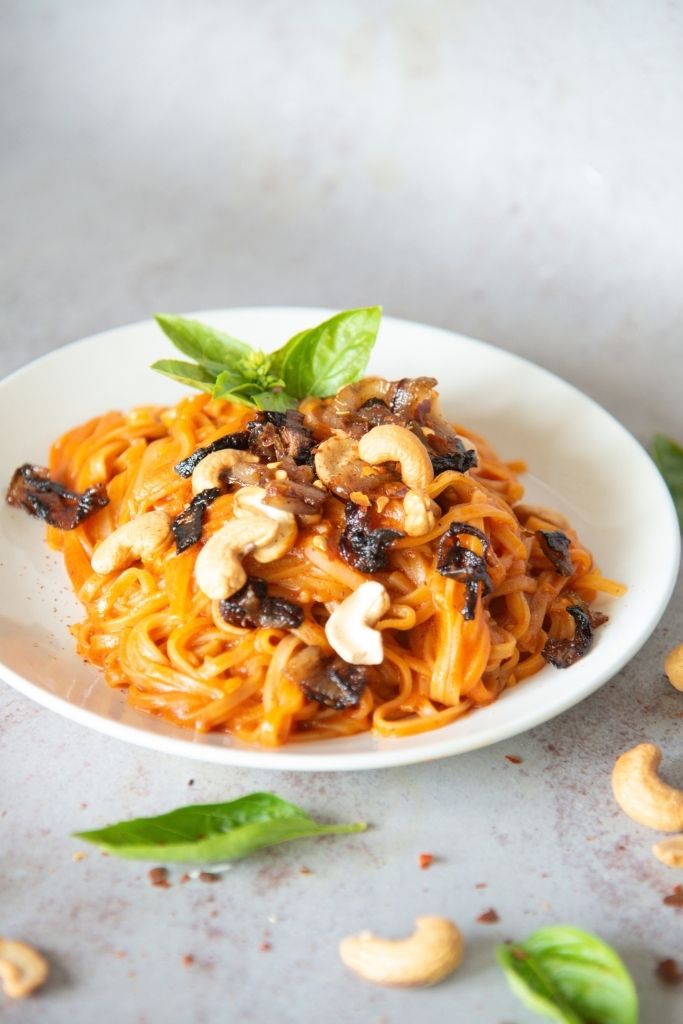
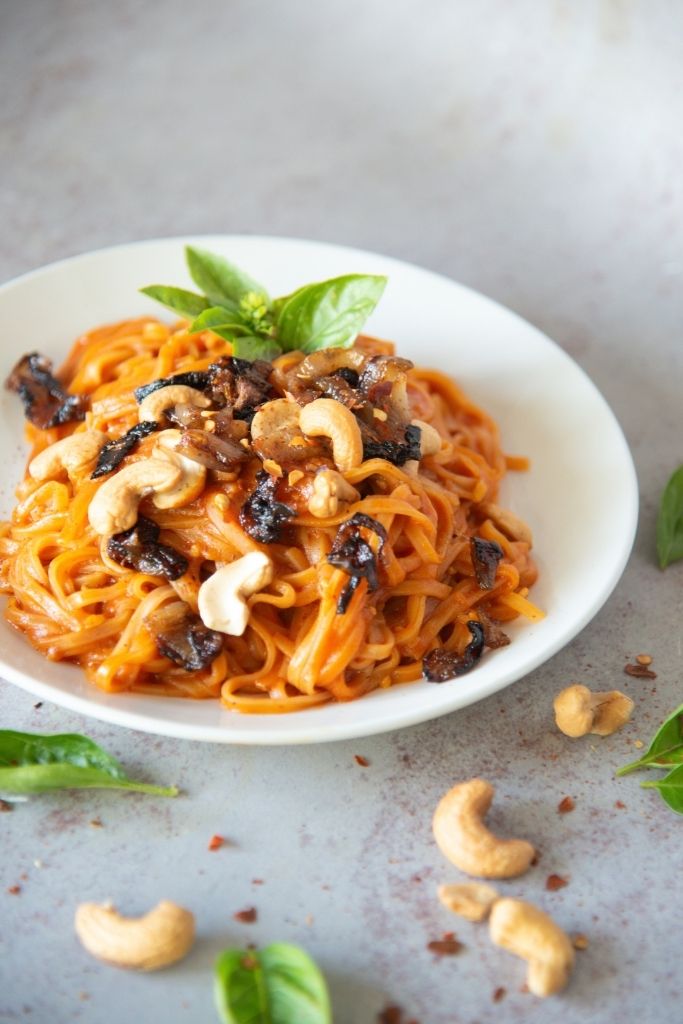
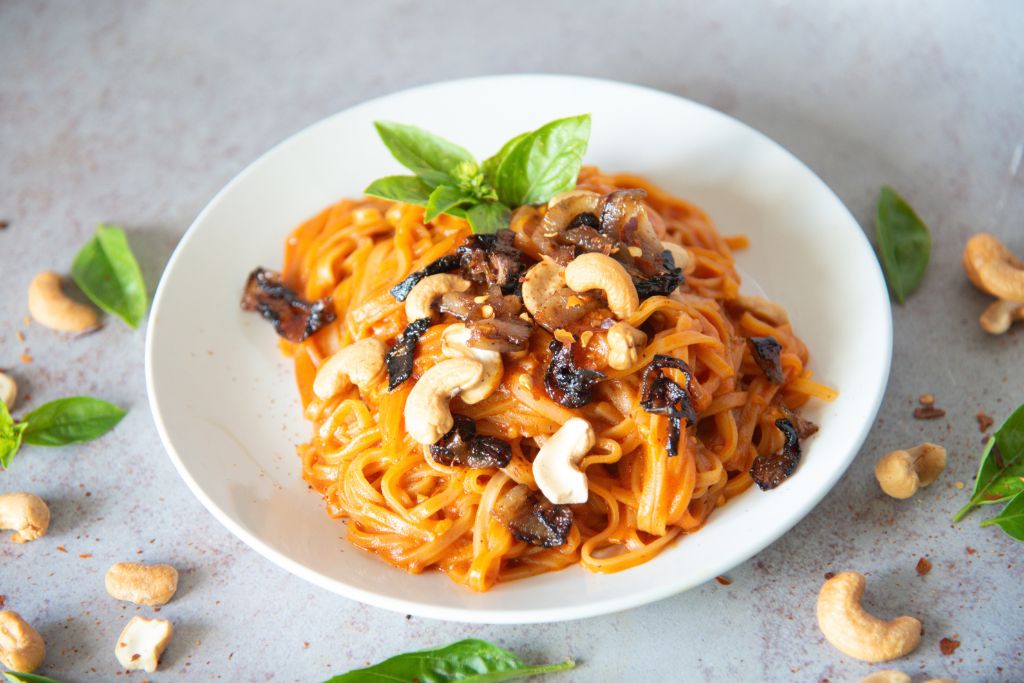
Plate the finished Thai red curry noodles, and top with toasted cashews, your crispy shallots, and a sprinkle of fresh basil.
Enjoy!
Recipe Notes
Any leftover red curry noodles can be stored in an airtight container in the fridge for up to 3 days. Leftover noodles can easily be reheated on the stovetop with a splash of water or broth to keep them from sticking to the pan. Just keep in mind that the noodles will continue to absorb the sauce the longer they sit; they will still be yummy, but leftovers will have significantly less sauce.
Thai red curry paste can be found at most stores. I’ve never had any trouble finding it at my local grocery store, but if needed, it can also be ordered online.
Personally, I like to make this recipe spicy, or spicier, by adding crushed red pepper flakes or even fresh chilis!
Normally, I make this recipe with just the cashews and crispy shallots, but feel free to add some protein of choice to make it a little more filling, or any of your favorite sautéed or fresh veggies!
Looking For More Great Noodle Recipes To Try?
Spicy peanut ramen | Thai-inspired recipe
Cheesy Gochujang Ramen Noodles
Spicy Beef Noodles (30-minute recipe!)
Spicy Cabbage Noodles (easy noodle stir-fry)
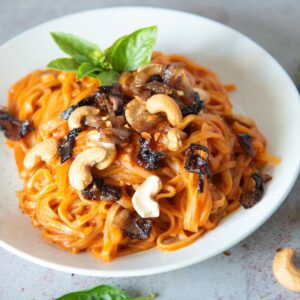
Thai Red Curry Noodles | with crispy shallots & cashews
Ingredients
- 16 oz brown rice noodles I like to use thin brown rice noodles, but you can also use egg noodles, wide rice noodles, soba noodles, or udon noodles.
- 1 can full-fat coconut milk the brand I use comes in a 13.66 fl oz can
- 4 tbsp Thai red curry paste
- 2 tbsp tomato paste
- 2 tbsp soy sauce
- 3-4 cloves garlic minced
- 1/4 tsp ground ginger
- 1 tbsp olive oil
- 2 tsp maple syrup You can also use honey, white sugar, or brown sugar to sweeten the sauce.
- 1-2 tbsp lime juice I used 1 lime
- 1 tsp cornstarch
- sea salt and freshly ground black pepper to taste
- 3-4 shallots peeled and thinly sliced
- butter or additional olive oil for cooking the shallots
- 1 cup salted toasted cashews
- 1/4 cup fresh basil finely chopped.
Instructions
- In a small skillet over medium heat, melt some butter or drizzle the pan with olive oil, add your sliced shallots, and cook, stirring often, until the shallots are crispy.
- Once the shallots are done, remove the pan from the heat and set aside until ready to use.
- Bring a pot of water to a boil; once boiling, cook your noodles of choice according to the package instructions. Drain and rinse under cold water to keep from sticking. Set aside until ready to use.
- Drizzle the olive oil into a skillet(I like to use a large skillet so there is enough room for my sauce and noodles), add the minced garlic, and cook, stirring often, until the garlic is slightly browned. Add the ground ginger and cook until fragrant.
- Add the coconut milk and whisk to combine. Then add the soy sauce, red curry paste, tomato paste, maple syrup (or sweetener of choice), lime juice, salt, and pepper. Stir to combine, taste, and adjust the seasoning if needed.
- Bring to a gentle simmer, stirring often. Once the sauce is simmering, add the cornstarch and whisk to combine. Continue whisking until the sauce thickens enough to coat the back of a spoon, roughly 2-3 minutes.
- Add your cooked noodles to the thickened sauce and toss until they are completely coated in the sauce. Continue cooking just until the noodles are heated through, then remove the pan from the heat.
- Plate the finished Thai red curry noodles and top with toasted cashews, your crispy shallots, and a sprinkle of fresh basil.
- Enjoy!
Notes
- sautéed bell peppers
- Thai basil
- green onions
- sautéed bok choy
- bean sprouts
- green beans
- sesame seeds
- chili flakes
- fried egg
- crispy tofu
- snow peas
- grilled chicken
Nutrition
Nutrition information is automatically calculated, so should only be used as an approximation.


