The Best Homemade Pie Crust
Making the best homemade pie crust at home is a lot easier than you might think, but first, you'll need the perfect recipe!
Ingredients
- 2 cups all-purpose flour
- 1 tsp salt
- 10 tbsp cold butter cut into pieces
- 5-8 tbsp water
Instructions
- In a large bowl, combine the flour and sea salt and whisk to combine.
- Add the chunks of butter, then using your hands or a pastry cutter, gently work the butter into the flour mixture until it resembles coarse crumbs.
- Add 4–5 tablespoons of water and mix with a fork, adding more water a little at a time as needed, until the mixture comes together. Be careful not to add too much water or over-mix the dough. The pie crust dough should just stick together; when pressed, it shouldn’t be smooth or soft.
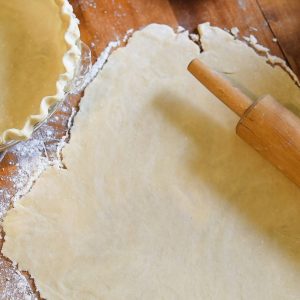
- Divide the dough into two equal pieces, and press each piece into a ball with your hands. Then roll them out one at a time on a lightly floured surface until they are roughly 1/4-inch thick, or large enough to fit in your desired pie dish (I usually use a 9-inch pie pan). This crust can be used for any of your favorite pie recipes!
Notes
Tips and Tricks for Making Homemade Pie Crust
Always use cold butter:When making traditional pie crust, always—always—use cold butter! Cold butter makes a flaky crust. If you use room-temperature butter, your pie crust may become too soft and sticky. Add the water a little at a time:
The biggest mistake I make when making homemade pie crust is being impatient and adding too much water. If your mixture seems too dry with only 5 tablespoons, add more water one tablespoon at a time—never more—and mix. Adding too much water is easy to do, but the key to a flaky crust is a crumbly mixture, and the less water you use, the better. Roll your crust out carefully:
A perfect flaky pie crust starts with slightly crumbly dough. This can make rolling out your crust a little tricky or not what you’re used to. When you’re first learning how to make pie crust, work slowly and gently when rolling and transferring the dough. Take your time and don’t rush. Working too fast might cause the dough to rip or break, and using too much flour can dry out the dough and cause it to fall apart. Making homemade pie crust might seem intimidating at first, but I promise it gets easier each time! It’s easy to master with just a little practice, and if you stick with it, you’ll be turning out the perfect pie crust in no time.
Pie Crust Troubleshooting
Here are a few common problems people run into when making and baking homemade pie crust, what they mean, and how to fix them next time. My crust isn’t flaky.If you’re following the tips above and still struggling to get a flaky crust, you and I have a lot in common! It’s very likely that you’re still adding too much water. You’d be surprised how easy it is to overhydrate pie dough. Next time, try adding the water in very small amounts—less than 1/2 tablespoon, even—until the dough just barely holds together. You can even try rolling out your crust when you think it’s still a little too dry. Sometimes the dough doesn’t need more water; we just think it does! My bottom crust keeps breaking apart from the edge.
This is usually a temperature issue. If you are chilling your crust, it may be too cold, which causes it to break as it bakes. Allow chilled dough to warm up slightly before rolling and baking. This can also happen if the dough is too warm and the butter has started to melt. If your dough feels too warm, pop it in the fridge for 10 minutes before rolling and baking. My pie isn’t golden on top.
This is an easy fix! To make a perfectly golden pie crust, simply brush the top crust and edges with an egg wash before baking. My crust is too soft or sticky.
This is likely caused by either too much water or butter that was too soft. Try adding less water next time. If your butter was soft or room temperature, that can also make the dough sticky. Wrap the dough tightly in plastic wrap and chill it in the fridge for 10–15 minutes before rolling and baking.
Nutrition
Calories: 455kcalCarbohydrates: 95gProtein: 13gFat: 1gSaturated Fat: 0.2gPolyunsaturated Fat: 1gMonounsaturated Fat: 0.1gSodium: 1167mgPotassium: 134mgFiber: 3gSugar: 0.3gCalcium: 21mgIron: 6mg
Tried this recipe?Let us know how it was!